When you remember the bad times, you know better how to do good

As we try to control others in the world, we need to appreciate the consequences of this effort, good and bad. Let 9-11 not only help our nation be more mindful of its place in the world, but let it help you and me to be mindful individuals of our communities.

When we give others the authority and money to do things on our behalf, we are responsible for their actions.

Do you know what our government is doing, especially who they are killing, in other countries today on our behalf?

You are more important than you think

“How can I help you?”
“I was calling to close my Citi accounts.”
“I’m sorry to hear that. And why are you wanting to close your account?”
“Well, after I’ve been reading about the part that Citi played in buying and selling mortgage bond derivatives, going into huge debt, which caused the market to collapse, I feel that I can’t do business with them.”
“Uh. Ok. So you’re closing your bank account because of the mortgage bond derivatives or whatever?”
“Yes.”
“Ok.”
Silence.
“You know, back in 2008 the market crashed-”
“Oh, I know. I’ve been an account specialist for 10 years.”
“Ok”
“So you’re closing your Citi account? Are you not having a bank account anymore…?”
“I’m closing all my Wall St bank accounts. And keeping my accounts with my local bank.”
“Ok. Well, I can’t turn back the clock, unfortunately. It looks like you had a lot of activity on your accounts.”
“Yes.”
“So 4 years later you’re closing your account..”
“Yes, I would’ve done it sooner, but I didn’t know things would turn out like they did.”
“Well, I can’t speak to the actions of the bank, but restitution has been made and we’ve moved ahead.”
“I don’t think it has. The US market collapsed, and, you know, there’s blame to go around, but I think the banks need to face the consequence of their actions.”

The best part about living in a free society is that if someone does wrong, we don’t have to work for them if we don’t want to. We can quit. Or if there is someone who works for us and they do wrong? We can fire them if the government won’t do it.

The government, of course, encouraged the banks to give out mortgages by providing them the money, which led to homes being overvalued, and people getting homes who wouldn’t have been given mortgages before, but then defaulting on their payments.

But the bankers made the bad loans, and the Wall St banks deceptively packaged the bad loans with the good and sold them with good ratings, so it feels right that I fired all the Wall Street bankers that were working for me. Given, I’m still part of the system. And my money is still coming from a corporation, since I work for one. But it’s not coming from the most carelessly powerful corporations of all. The ones that the government is allowing to exist in the same too-big-to-fail capacity that they were in before the crash of 2008. Apparently, these banks should be called too-big-to-control.

But I controlled my business with them. And if we all do that, and make it known we will not stand for such clear carelessness and deceit, and we will not have our bank accounts, 401k’s, or credit cards with them, then I think the banks will be controlled. And they will be controlled in the best way possible:

By the customers who they have wronged and who must pay for their bailout.

And that’s you and me.

Engage. You don’t need to be an expert.

Do we talk to other people about what we’re doing? About what they’re doing? Do we ask why we do what we do..buy what we buy, bank who we bank with..eat what we eat..send our kids to the schools that we send them to, fund the wars that kill for goals we support? Do we not only talk, but do we listen to what they’re saying…and even more importantly, think about what they really mean?

Are we trying to be members of a community, or do we see everyone as doing their own thing, a zero sum game, as passengers on a ship out of our control? Or do we see ourselves as part of it, as responsible for it, unafraid of facing the problems of our society?

Why we don’t do these things is addressed by Meslin. He says: “As long as we believe that people, our own neighbors, are selfish, stupid or lazy, then there’s no hope.” We must recognize this, because it is the collective that is going to change things. And once we accept this, we must have a conversation.

Politics isn’t a bad word unless you’re using it to win an argument, or give yourself an identity. Politics, in fact, is probably the most important thing to talk about right now. Not partisanship…but politics. There’s only one thing more important, and that’s figuring out that you belong in the conversation because you’re not an island onto yourself. That’s what Obama meant, but couldn’t really express.

We’re not different than anyone else, regardless of what they’re doing out there. The guy between jobs, the CEO, or the small businessperson. We have the opportunity to decide because people believed so much in the idea that we’re all equal, that they were willing to die for a system that could give us the power to decide…and it DID give ALL OF US the power to decide. And we must decide, or else the institutions, corporate and government, they will do it for us. And I think these institutions have gotten too big to handle our needs. It’s up to us to start this conversation.

Now, it’s up to us.

Taking off the blinders requires learning how to ignore

I have trouble sitting down to work sometimes. My focus is on many things, and so it is on nothing. Then I realized how to let go. And it was more than simplifying and prioritizing. It was the realization that I needed to acknowledge and then ignore many things. In order to get stuff done, I needed to ask myself throughout the day, day after day, week after week: “What do you want? What are you doing?”

The other day, I was returning from the bathroom to continue my writing and saw the new handheld vacuum I had purchased recently. I like tools, and this was a bright, shiny new one. Soon, I was unplugging it, having just swept the kitchen. I stopped suddenly and thought, “What am I doing? Why am I not writing?”

Vigilance is key

Neil Gaiman has a great analogy for making tough decisions in life. If your goal is a mountain, make sure your decisions are taking you towards that mountain, not away. The mountaintop is far so it’s ok if it takes you a long time to get there, as long you’re making your way to it.

My experience would make me add this to his analogy, “Make sure you’re not circling that mountain, neither going towards it or away from it.” To this end, I think it’s vastly important to reiterate to ourselves, “What do I want? What am I doing?”

The day I started ignoring things was ironically the day I took the blinders off. I looked up from the solid foundation I was laying and noticed all the options that were open to me, from professional to social, and then I decided to stop and ask, “What do I want?” It is overwhelming, but the possibilities appear around you, and it is the first step towards accomplishing what you want.

The saying that ‘ignorance is bliss’ isn’t true. We’re not animals. To achieve bliss we must be conscious of our surroundings and taking a stand and making choices and adapting. And this requires taking the blinders off and asking ourselves repeatedly, “What am I doing? What do I want?”

How to fix a problem 101: Address the cause

The city decided to start providing water to the runners at all the charity runs. It was for a good cause, and the runners needed the water, and it would be a good gesture of support to the community. So the city contracted a company to provide the water and it went well for the first year, but the next year the company raised their prices, just a little. They said they were switching over all the water to bottled water, which the runners had been preferring. The city agreed, and another brilliant year of charity runs went by. At the end of the year, the company again raised their prices, indicating that they were upgrading to higher quality water. The city again agreed and another year of runs was soon completed. At the end of that year, the company said they had found a great response to the few water misters they had installed that year, so they were increasing the prices again. The city wanted to keep the runners happy and so agreed to the price increase again. And so it went, year after year – the runners were getting water, energy gel packs, sunblock, sunglasses – until the city decided to add a small fee to the entrance price of all the races, so all the runners could chip in for the benefits that were offered.

After a few years, the company’s prices kept increasing, and the fees kept increasing, and the runners reacted: Some runners didn’t care. They didn’t think about it too much. Others thought it was reasonable, since everything that was offered was good for them. Others were irate that they were being forced to pay for things they didn’t use much, or at all.

If you were the city, would you continue accepting the increased costs and raising your fees? Is there anything else you would do? Got your idea? Great. Now let me change a few things in the story.

Say instead of water and sunblock, it was health care. And say the company was an insurance company. And instead of the city, it was the federal government. And let’s call the fee a tax.

We need water. Everyone should have water.

And we need health care. But do we need bottled water and energy gel? Do we need the number of MRIs, CTs, and surgical treatments that are provided every year in this country? Studies have found many of them unnecessary, so many, in fact, that it is one of the main drivers of our relentlessly increasing cost of health care. The other factors? Administrative costs of working with different insurance companies.
And the third factor: People not following their doctors’ orders.

So, who gets the blame? People for wanting better stuff? The city or the company for wanting to give the people what they want? Everyone is responsible, which means no one should be blaming anyone. Pointing fingers at selfish insurance companies or rich doctors or people who choose to be unhealthy does nothing except deny each of us our responsibility.

Would you do what the current government is doing and force a water tax on everyone, regardless of their responsible use of the water?

Would you continue to feed the beast of the health care system as costs increase year after year after year?

Or would you try to bring down the cost of the product by addressing why we’re using water misters when maybe what we need more of is education and a reusable plastic bottle we can fill from the tap?

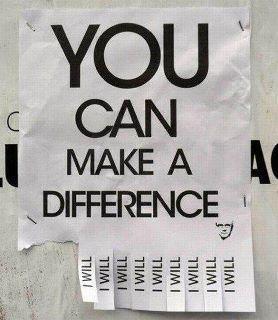
Let go of what you think you need

“If you have built castles in the air, your work need not be lost; that is where they should be. Now put the foundations under them.” -Thoreau

Most of my life, I didn’t have a problem with building castles in the air. Instead, I was laying solid, immovable foundation, hard and fast… on a swampy marsh. But I was totally invested in that career path to be a doctor. The familiar path. Without realizing it, I became that path. My identity was becoming that one thing, and all other things were unacceptable. Other options would be failure. Mindless, thoughtless, I was putting down a foundation for the foreman in charge, society at large, the unseen owner, for his approval, for the reputation, for my ego. I might as well been a bank thief, because I was taking something. Rather, I was a Wall street bank executive, because I was violating a trust. But I was violating my own trust. My self’s needs, and freedom. I was so focused on the goal, I lost sight of the why. The most important question of all. Why do you need it?

Let go of what you think you need. And then you won’t be afraid to risk big in order to get what you really need.

What, or who, do you need to let go of? Or what have you already let go and where has it taken you as a result?

Comment and let me know.

Neil Gaiman tells graduates how to make it

“Sometimes the way to do what you hope to do will be clear cut, and sometimes it will be almost impossible to decide whether or not you are doing the correct thing, because you’ll have to balance your goals and hopes with feeding yourself, paying debts, finding work, settling for what you can get.

Something that worked for me was imagining that where I wanted to be – an author, primarily of fiction, making good books, making good comics and supporting myself through my words – was a mountain. A distant mountain. My goal.

And I knew that as long as I kept walking towards the mountain I would be all right. And when I truly was not sure what to do, I could stop, and think about whether it was taking me towards or away from the mountain.”

“The moment that you feel that, just possibly, you’re walking down the street naked, exposing too much of your heart and your mind and what exists on the inside, showing too much of yourself. That’s the moment you may be starting to get it right.”

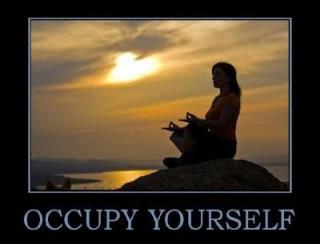
Occupy yourself

Don’t think and the days go by, never to be done again, except in our heads. If only I’d done this, if only I’d done that…

But doing what? I’m often busy doing things as the days go by, but not really any thing. I’m buying things. Moving things. Cleaning things. Trying to maintain a steady state of constant activity. A mind occupied by everything but my self. Activity is the appearance of production, like a big leafy top to a little carrot.

More important is YOUR thing. That which will make you happy. It will leave you smiling at the end of day. But then I think too much on my thing, and the same situation is created. Stymied by thoughts and words. The paralysis of analysis. I find the best is when I plan. Then do.

The thinking comes first, so that the doing will flow… eternal, unconscious and unrestrained.

“Words are the freezing of reality”

Before Timothy Leary died 16 years ago today, he said:
“Words are the freezing of reality”

Words are a snapshot and I capture an idea with my words. I have peeled it and presented it to you. For you, I have created something. I took what wasn’t there and made it whole. So these ideas, pop, I project them aloud, sending air vibrating, invading your brains. My idea, becoming your idea, a viral delivery that can now spread. Because although you may not embrace it, it is there. My words, your words, have that power, over the air or we paint them onto a digital canvas, smeared in bits and bytes, moving from computer to computer, mind to mind, until they find a dynamic equilibrium, shooting back and forth across a literal web, spiralling out through our culture.

A freezing of reality, indeed, but more… it is a freezing, thawing, and mass digesting at the speed of light, rearranged into something new, and then frozen again, ever spreading.

If only you could see what has happened to words, Mr. Leary. We, the people, we don’t have to just listen anymore. Now we can have a conversation. Now we can create something big.

If we want to.

Memorial Day is not only about respecting our troops

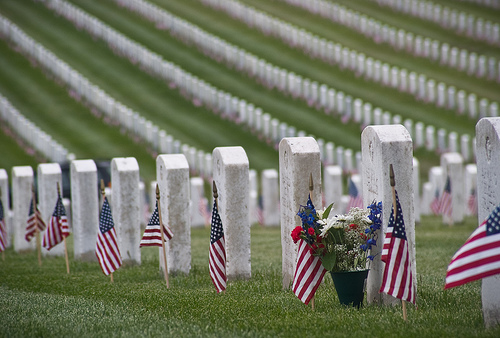
Memorial Day is not only about respecting our troops, but knowing why they are (and were) doing what they’re doing. If we don’t ask the “Why?”, then our respect and our support for their actions is so narrow that it is meaningless, and in fact, dangerous.

Respect also requires empathy, and empathy for our troops includes a feeling of the sacrifice they are making, and perhaps making that sacrifice ourselves. Memorial Day can be treated as a holiday, but true empathy doesnt get released from a pod in short bursts once a year.

The counter to my observation would be, “You’re complicating a simple idea: Our troops are willing to die for our country. Let’s honor that.”

And this is a valid point. It reminds us to appreciate what we have in this country. Memorial Day commemorates a simple, obvious idea. So why do we need to be reminded to honor this powerful sacrifice if it’s so obvious?

You can see that it all leads back to the “Why” and “What” our troops are doing.