The most difficult decision of my life

There are some actions that are not right, but context defines our decisions. Sometimes we must do the wrong thing at the right time. Me walking away from a medical degree, for instance. It was what needed to be done at the time, much to people’s disbelief. But I wasn’t living my life. My life was living me.

What is indisputable is that we’re here to do something worthwhile. And who is the one that’s going to tell you what that thing is?

Well, that’s going to be you. Not society. Not your parents. Not your neighbors, and not your partner.

The how and the why is answered by you, and you alone.

Your values are what make your actions your own.

“Yea, but we do.”

I was in the gym the other day and there were weights all over the place, but they weren’t on any racks. Some dumbells were strewn on the floor and the barbells were left on the bars. I arranged the weights that I needed, racking some to make room for the weight I wanted, and I did my exercises. When I was done, I started to put the weights back, but I hesitated, thinking, “Why should I? No one else did.” Then I thought of Erik.

Erik is one of my most interesting friends. He is a writer, which might explain why he was so interesting. He likes Goth clubs, but he always seemed to be an outsider, like he was researching a book he was writing. He dresses their way, he likes the same music, and he is highly tolerant of their unique lifestyle. But Erik isn’t angry at anyone. In fact, he likes everyone. His smile literally beams as shiny as his shaved head and black combat boots. I like Erik because he simply does his thing, with adventurous heart and a thinking mind. I visited him soon after he had moved to Las Vegas and we found ourselves in his gym.

We did bench press and the weights were not racked. We arranged the weight for ourselves and did our sets, taking turns until I finished the last set. Erik started putting the weights away, and I said, “Erik, let’s leave them. Other people didn’t put their weights away.” Erik didn’t look up as he continued pulling off barbells, “Yea, but we do.”

I thought about this a few days ago, although I’d shrugged it off at the time and helped him begrudgingly. I thought about how easy it is to pass up doing the right thing. Our actions are lost in anonymity… all of us shop at the big superstores which use greeters now as they try to replicate the feeling of the mom and pop shops that they (and us) are putting out of business. We buy things made in the China because it would require serious effort to go without that item or find an alternative to it that was made here. It’s easy to keep our money and retirement accounts with the Wall St banks after they defrauded people, because everyone else is. What difference does it make when there are so many people out there doing the same thing?

The difference is because it’s wrong.

So I returned my weights to the rack. No biggie, I know. And I’m only one person. But I’m part of a larger environment, and if I don’t think about that, and more importantly, if I don’t do something about it, then I am part of the problem. Other people may not do anything, but Erik’s words are still strong in my head:

“Yea, but we do.”

TED Talk Tuesday: Surprising study shows living longer depends on your community

Dan Buettner travelled the globe and found societies where many people are living over 100 years. And these centenarians are not sitting at home or in retirement villages, or using advanced health care to get them there. The video Buettner brings back is surprising, and his advice may surprise you even more. Longevity in these regions is not only based on diet and physical fitness. It’s based on our relationships.

The commonalities between the societies include what you’d expect: A plant-based diet with little to no meat. It includes not eating to fullness, and an active lifestyle. In addition, Buettner finds another similarity: These people are self-sufficient. They walk or ride bikes to where they need to be. They are spiritual: They all have a sense of purpose. They respect their elders and put family first. The children take care of their parents when they reach old age. And they interact with the community.

Buettner puts together a compelling picture based on some real life information. The simple fact is, longer life means doing something of value and being valued. And really, this sense of purpose is something we all know. We just…got a little distracted.

“…when you think about it, your friends are long-term adventures, and therefore, perhaps the most significant thing you can do to add more years to your life, and life to your years.”

The perfect backyard and the perfect person.

I was out walking with Jesse the other day. The sun was setting and the western skies were aglow with shimmering orange and yellow and red. We passed a home with a back yard that was carefully landscaped with evergreen trees. They were clustered within neat rings of stone. A decorative stone bench sat at either end of the yard. There was small, neatly trimmed shrubbery flanking the area.

“That yard looks like a park,” I said.

I thought about the care of the owners to ensure that the branches were trimmed. The stones and benches clear of weeds. The grass surrounding them cut. I said, “I wonder what the yard is going to look like in a hundred years. Will the yard even be there? Will it be destroyed? Will the family have moved on, and will there be another family owning the place?”

The transience of life

I think about how much the yard was appreciated. I think of our constant struggle to keep order. Maintaining our hygiene, cleaning ourselves, walking about, working, exercising, cleaning again. Picking out the soap and shampoo that we like, maybe it’s the cheapest, or the one that has best scent, or the one used in all the salons, or the one that’s not tested on animals.

Finding the restaurant with the tastiest dishes, the ones we must have, and we’ll pay for it, because nothing else is good enough. Maybe getting fast food, because we just want to eat something, anything. Or going to places that get their ingredients locally. Or having a garden, or not eating animals because we do care, we care a lot about our actions…

Does it matter?

Eating, brushing our teeth, eating again, brushing again, stopping the rot, keeping the bacteria at bay. Our diligence! Cutting the grass, cursing the rain, cutting the grass again, trimming bushes.

Again and again and again.

Going shopping to replace worn clothes, or just because it feels good. Trying to make more money, searching for that job that will make us comfortable, that income that’s just out of our reach, if only we could get to it.

Until we don’t do it anymore

Until one day, we stand at the gates to be judged. The gates of truth. Our conscience. And we ask ourselves if we spent our time wisely. Did we make an effort to do the right thing, or did we follow the crowd? Did we work too much, too little? Did we care about our contribution, about the consequences of our actions? Did we care about people, about the future, or did we throw up our hands in helplessness? Did we worry too much, or did we enjoy our life?

I looked at the yard and thought all this, because this is what I do. I thought about the big clock. Tick-tock. And then I stopped thinking of that. And I started appreciating everything a little bit more.

The perfect backyard and the perfect person? Neither is possible. But that doesn’t mean we shouldn’t try for them.


TED Talk Tuesday: Ken Robinson says schools kill creativity

School is structured. There’s a curriculum everyone must pass. There’re benchmarks that are standardized by the state. But some students get an individualized education program. Who are these lucky few? These are the ones who cannot perform at the predetermined levels. The misfits.

Schools don’t reward creativity. They reward assimilating. Ken Robinson says our students are being educated using principles from yesteryear, when our population needed to be prepared for the industrial revolution. Today, we can see that the only industry left in this country is the service industry, and it’s not a field that most people want to work in. Seth Godin observes that new careers are not with a corporation, but in creating your own niche. It’s an empowering time of change in the US, but it is also stressful. Godin agrees:

“Stressful? Of course it is. No one is trained in how to do this, in how to initiate, to visualize, to solve interesting problems and then deliver. Some see the new work as a hodgepodge of little projects, a pale imitation of a ‘real’ job. Others realize that this is a platform for a kind of art, a far more level playing field in which owning a factory isn’t a birthright for a tiny minority but something that hundreds of millions of people have the chance to do. Gears are going to be shifted regardless. In one direction is lowered expectations and plenty of burger flipping… in the other is a race to the top, in which individuals who are awaiting instructions begin to give them instead.”

If only the education system can train our children to achieve in this market.
Robinson is a master storyteller with an important area of interest, about how our education system is failing, right along with the one in four American students failing out of high school.

“If you think of it, the whole system of public education around the world is a protracted process of university entrance. And the consequence is that many highly talented, brilliant, creative people, think they’re not, because the thing they were good at at school wasn’t valued, or was actually stigmatized. And I think we can’t afford to go on that way.”

Don’t blow through the pleasantries.

“Hi there.”
“Hi”
“How are you?”
“Good. How are you?”
“Almost perfect.”

It’s true that I’m almost perfect. Really.

I’m being more honest than when I say “ok” or “good”.
I’ve also heard people give the depressing “Not bad” and “Can’t complain”.

The “How are you”s are part of the exchange of pleasantries. They’re supposed to be pleasant, right? Then why do we blow through them with a catch phrase? And then we stall, searching for something more tangible to talk about, like the weather, which will save a conversation, yes, but it will also make you want to check your cell phone for more stimulating conversation with faceless people.

I realize that the so-called pleasantries breakdown the walls we have built up. They slowly bring the conversation to more meaningful levels, so that we’re more comfortable.

Why is that?

Sure, our genes may be coded with the fear response to strangers. Strangers who may be from another tribe who want to kill me for my food, shelter, or women, but why continue the drive-by pleasantries today, especially in this country, where survival is pretty easy? Even in low-income areas, no one is starving.

Ok, so keep the superficial pleasantries…what’s next?

When we get to the more meaningful part, we circle around asking the “how” and “why” question and get neck-deep in the comfortable quicksand of what we did, where we went, or what someone else is doing. We might get to some feelings, like “It sucked.’ Or “It was awesome.” But when was the last time we asked a probing “Why?” follow up?

We’re conditioned to make the “How are you?” the start of the conversation, and it’s ok to make it a greeting. Hey, it’s the best greeting I can think of..It jumps right into YOU. But instead of it being the start of the conversation, I think it should be the conversation. Let’s keep the courage of our convictions and see how someone else feels. Maybe give each other a new perspective?

The “how”s and the “why”s are the reason we’re here: It makes up the dialgoue that enables us to connect with people and grow.

I think a good start to connecting is to take that greeting seriously.

So…
How are YOU?

TED Talk Tuesday: Atheism 2.0


Alain de Botton says religion is a system that works. It knows human nature. So let’s not throw away the template just because the content is questionable. He wants us to use the religious method.

Religion treats us like children. And it is well to. We need to be life-long learners, but we cannot wait on chance occurrences to teach us the important stuff. Botton describes the value of the religious system of education, from the sermons to repeated practice, which the secular world has left to the individual.

Even our higher institutions expect the newly minted adult walking onto their campuses to know what it’s all about. After graduation, the corporation is ready to provide us the structure for our lives, and the branding and clarity.

“…except they’re right down at the bottom of the pyramid of needs. They’re selling us shoes and cars. Whereas the people who are selling us the higher stuff — the therapists, the poets — are on their own and they have no power, they have no might.”

Life is about growth and discovery, and we need to get into our groups and start communicating our ideas in a more organized way. The secular world has fled so far from religion, it’s forgotten that we need to congregate. We need sermons. We need to communicate ideas.

“My concluding point is that you may not agree with religion, but at the end of the day, religions are so subtle, so complicated, so intelligent in many ways that they’re not fit to be abandoned to the religious alone. They’re for all of us.”

Tell it, brother!
Amen.

National Defense Authorization Act has been passed: The government has now taken our right to trial

During Hurricane Katrina, martial law (termed state of emergency) was declared in New Orleans while the city streets were cleared, power was restored, and looting stopped. Martial law power was instituted during World War II when Japanese-Americans were imprisoned to protect all of America from the possibility that ethnic loyalties would turn the Japanese violent.

Martial law is declared when the safety of the populace is threatened. It gives military control over an area and military power over you. You can be arrested and jailed indefinitely until the military decides to release you. It is one of the paradoxes of life. We fight war for peace. We have martial law take our freedom, to protect our freedom.

Earlier this month, the government claimed the power of martial law

Congress passed the NDAA (National Defense Authorization Act) which has declared that American citizens who are suspected of supporting terrorism can lose their right to trial. This emergency measure is to protect us and is only temporary. Like in New Orleans, after power was restored and the roads cleared, martial law was lifted. Like after Japan surrendered to the US in World War II, the Japanese-Americans were released from prison.

But how long can the government hold current martial law power when our war isn’t against a group with a leader or against looters during a natural disaster? When do we win the war on terror?

It’s true, the military is not patrolling the streets, but why wasn’t the wording in the NDAA made more clear than “supports terrorism”? Why didn’t it specify that support is giving information, material, or physical help to a terrorist? Why didn’t the law err on the side of protecting our freedom while protecting us from terrorists? Why did they instead take absolute power over arresting Americans in the US?

A terrorist attack killed nearly 3000 Americans on 9-11.
In comparison, over 28,000 babies born in the US die before their first birthday

In reaction to the attack on 9-11, the government waged war in three countries, created a Department of Homeland Security, and has taken our right to trial.

I think we must ask why they deserve to take such a power to protect us in a war that has no end in sight.

Sources:
http://www.forbes.com/sites/erikkain/2012/01/02/president-obama-signed-the-national-defense-authorization-act-now-what/

http://www.webmd.com/parenting/baby/news/20081015/infant-mortality-us-ranks-29th

TED Talk Tuesday – Derek Sivers shows us how to start a movement


It’s hard being the first to step out of the group:

“Let’s declare our independence from the king.”
“Let’s free the slaves.”
“Let’s not eat animals.”
“I’m going to spin on my head while you scratch that record”

Sivers shows us that the importance of the leader is significant, but the first people who listen to him and do something are the key to driving a movement.

“If you really care about starting a movement, have the courage to follow and show others how to follow. And when you find a lone nut doing something great, have the guts to be the first one to stand up and join in.”

We are social animals, but thankfully, our need to achieve and follow our individual desires drags us forward to a better future, kicking and screaming…or in this case, dancing.

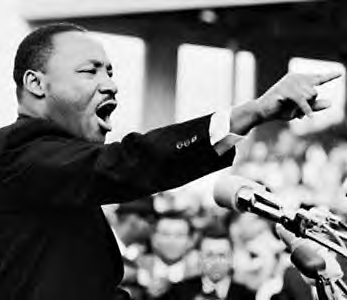
MLK commemorative post: Dr. King fought against the majority. Today we have the same fight.

Dr. King once said: “We shall match your capacity to inflict suffering with our capacity to endure suffering.” And so, today, we too, must sacrifice to take control of our lives once again.

Dr. King fought against the apathy of the white majority and today we also fight against the apathy of a majority

Dr King inspired others to face the powerful and established practice of discrimination. The discrimination which Dr King fought against was based on race, but it didn’t affect the mostly white US population. Society went about its business, just like today, but today our apathy led us to a recession that almost resulted in the total economic collapse of our country.

A corporate system without consumer oversight is a system that will promote inequality

Today we have a cultural acceptance of our powerful financial system, which has slowly grown and allows us to spend less and have more money in our bank accounts. The benefits of this system are for everyone, from the corporation to the consumer. Still, the situation threatens the very structure of our free society.

Power follows money, and today we see a movement of power from elected officials to a corporate minority. This concentration of power has grown so large that when the existence of a few banking and automobile corporations was threatened, the whole country was affected: Regardless if you were rich or poor, we lost businesses, jobs, and retirement savings.

We can reclaim power over the institutions if we follow Dr. King’s advice: Sacrifice.

A sacrifice of personal financial growth. As Dr King sacrificed, we too must sacrifice our way of life to correct the injustices of today: We must turn away the money that trickles down from careless and dishonest Wall Street bankers and the corporations. We must control our own finances and earnings to take back the power we are giving them. We must move our money to local banks and credit unions. Institutions should be dependent on us. Not us on them.

Race cannot be used to determine who is given opportunity, and neither can capital

Today, as in the past, we have a grave danger that cannot be ignored. We cannot continue to be apathetic about the division of the country into rich and poor, just as the population before the 1960s was apathetic about the division of the country by race. We cannot continue to watch our capital accumulate in the hands of the minority. The future of our society depends on our capacity to sacrifice and to recognize the power we have as consumers.

Yes. We can.